Research
Chemical separations have long been essential to human society. However, purifying component from mixtures is often complex, costly, and energy-intensive. In the group, we look for innovative ways to solve chemical separation challenges with the help of artificial intelligence, robotics experimentation and modelling tools, to accelerate the development of separation processes. We primarily focus on liquid-phase separation (e.g. solvent extraction), with various applications from the start (e.g. feedstock transition), to the end of the chemical value chain (e.g. end-of-life recycling). This ranges from understanding fundamental transport phenomena, designing novel extraction systems, to developing process models for in silico prediction of separation performances at large scale.
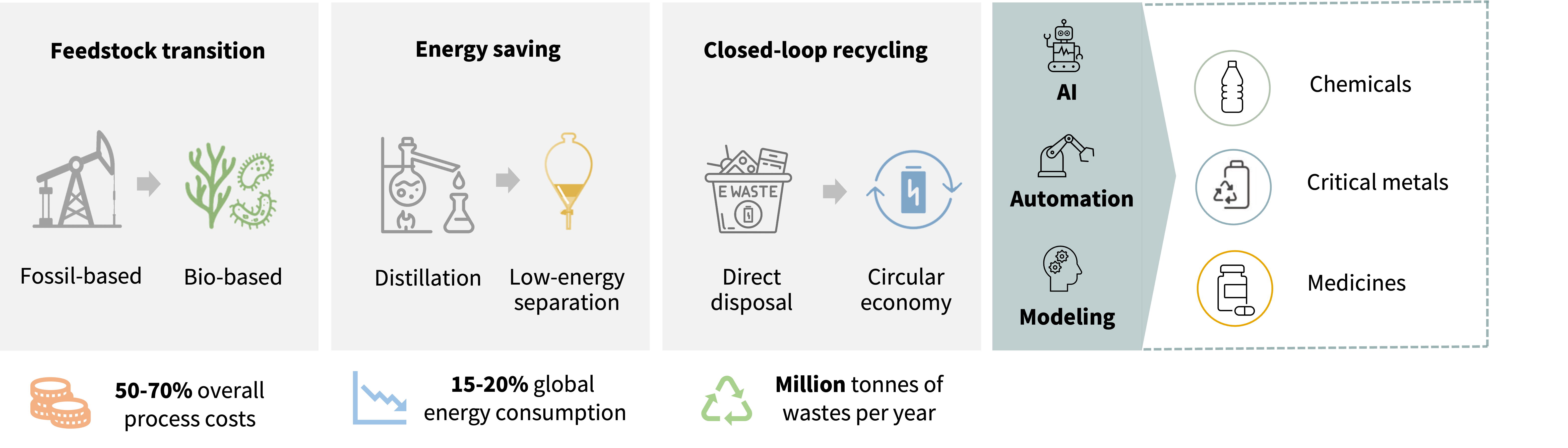
With the help of digital tools, we aim at:
- Understanding the complexity of separation science
- Accelerating separation process design and development
- Reducing cost and environmental impact from in silico testing and optimisation
Liquid-liquid fundamentals
Understanding liquid-liquid fundamental phenomena is important to the success of separation process like solvent extraction. In an extraction device, usually one liquid phase forms as droplets and contact with the other liquid phase through an interface. The interactions between the droplets (i.e. breakup and coalescence) and the molecules transport or reactions at the interface will plays a key role in determining the overall extraction performances. With the advanced imaging techniques and computer vision, we are able to capture the snapshots of these phenomena and extract useful information to better understand the underlying mechanisms of the separation processes.
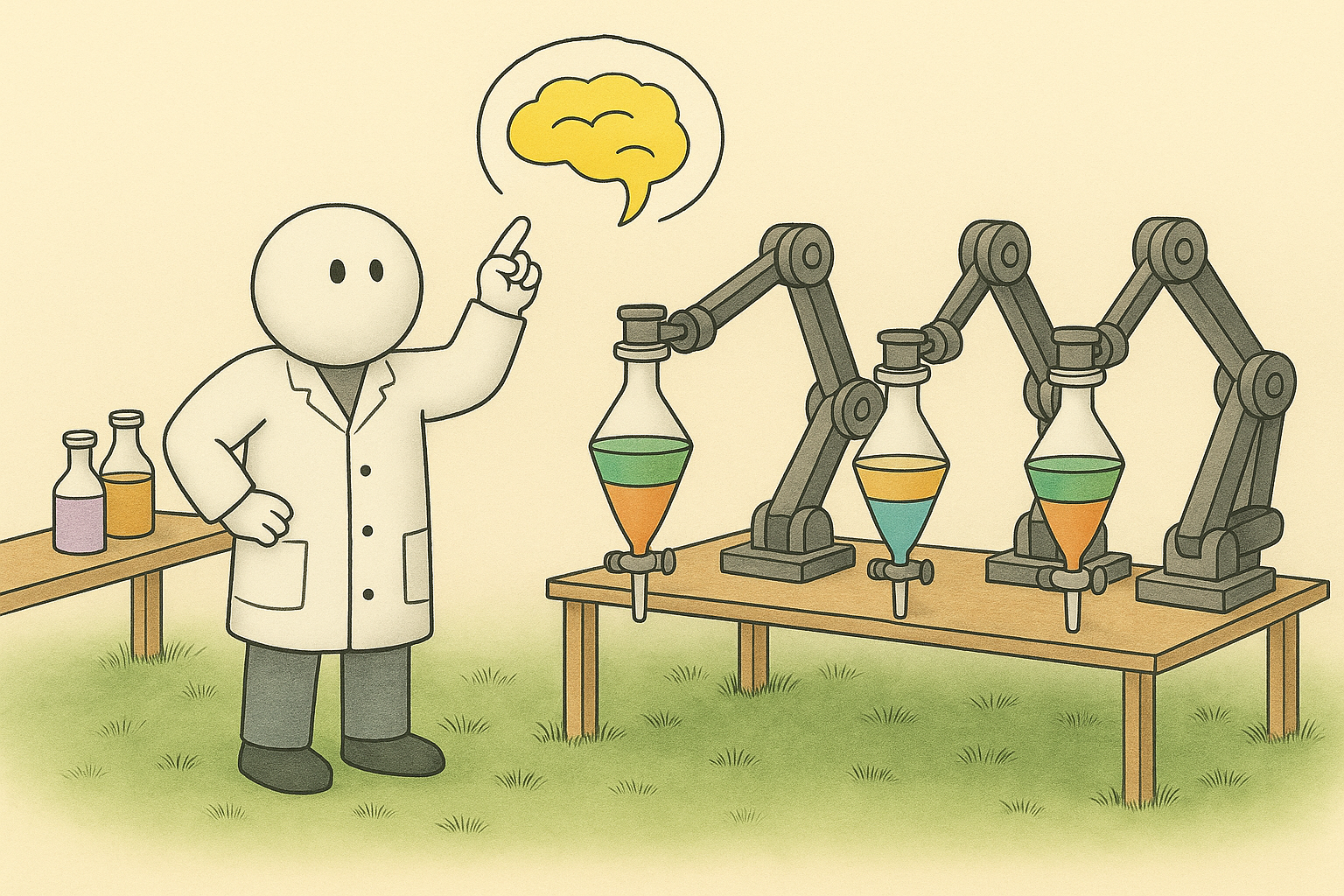
Autonomous experimental platform for separations
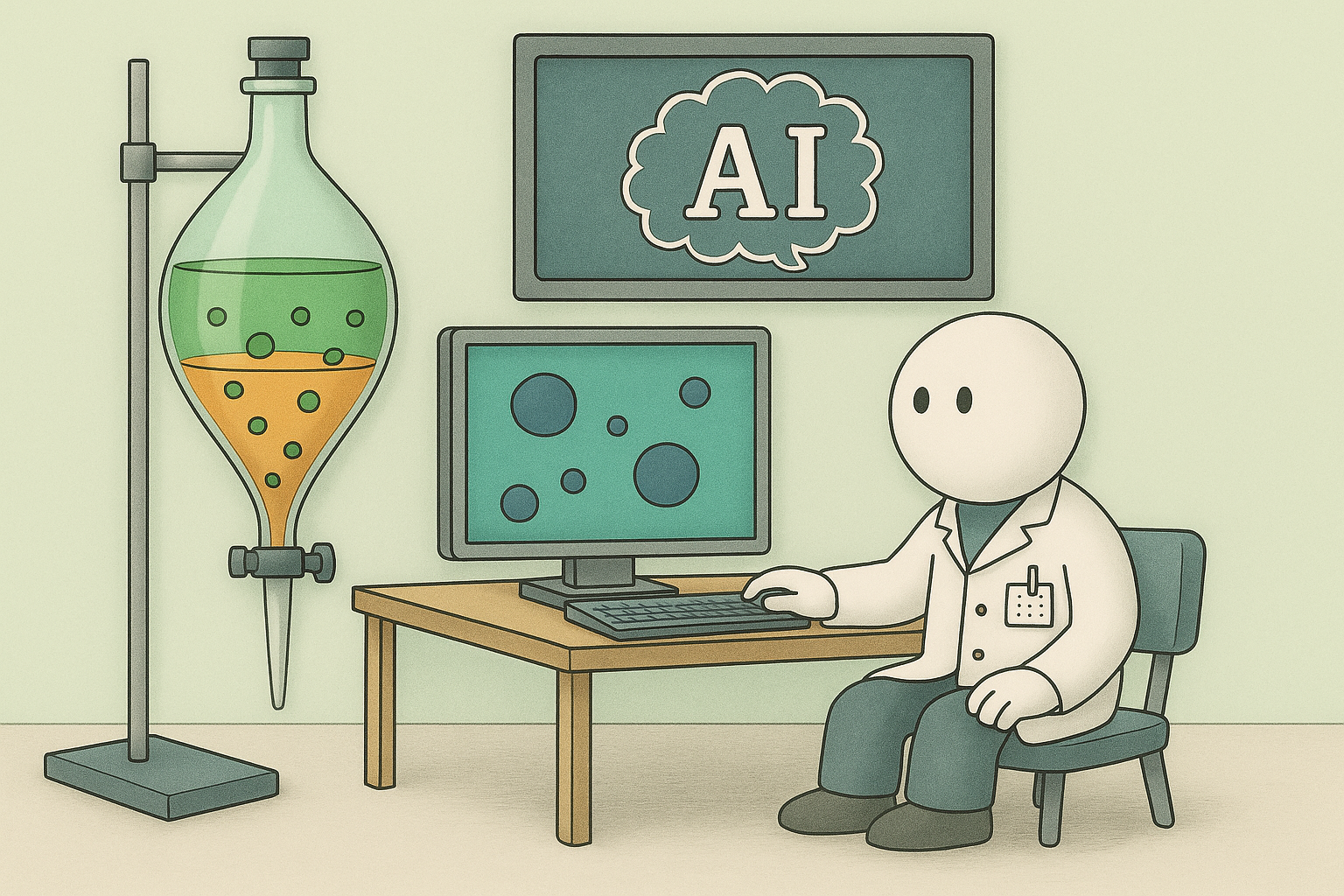
Identifying the key physicochemical properties (e.g. partition coefficient) is essential to screen novel solvent systems and design new separation processes. However, getting data is not straightforward with repeated measurements. By leveraging robotics and multiple types of sensors, we design experimental workflows to automate liquid handling and measurements of liquid-liquid systems. This will enable us to collect key information of separation systems in a high-throughput manner. Meanwhile, we also design “closed-loop” platforms for autonomous optimisation of separation processes, to identify the optimal experimental conditions for scale-up.
AI-assisted separation process development
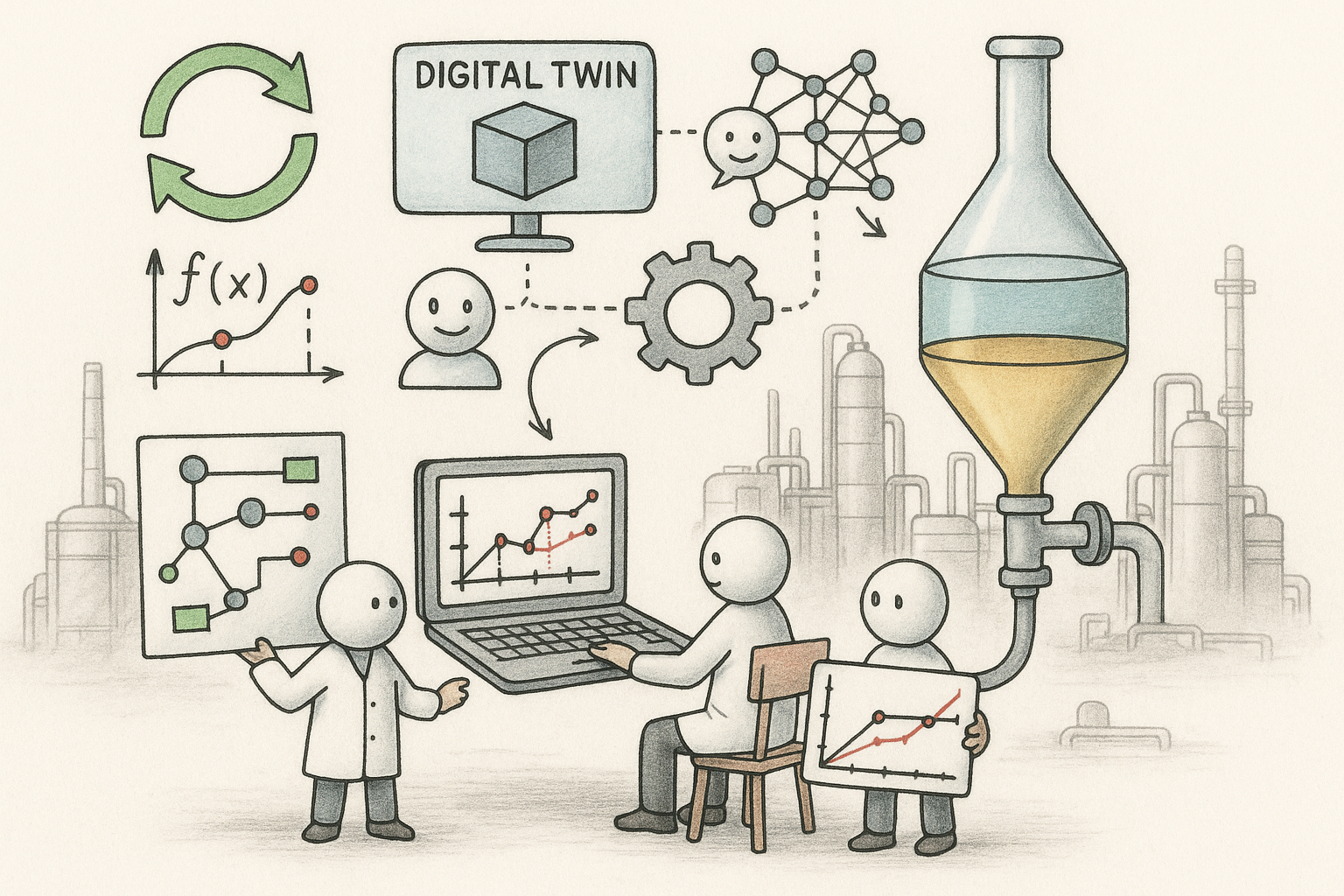
Moving from lab to manufacturing is never easy. We develop mechanistic models based on first principles to describe separation devices or a separation process. This allows us to understand the complexity of separation systems, as well as to create a “digital twin” to support optimisation or environmental and techno-economic assessments of the separation processes. We are interested in designing AI agentic systems to help us automating these design workflows. This includes model knowledge representation, automated model assembly as well as process design.
Novel separation processes
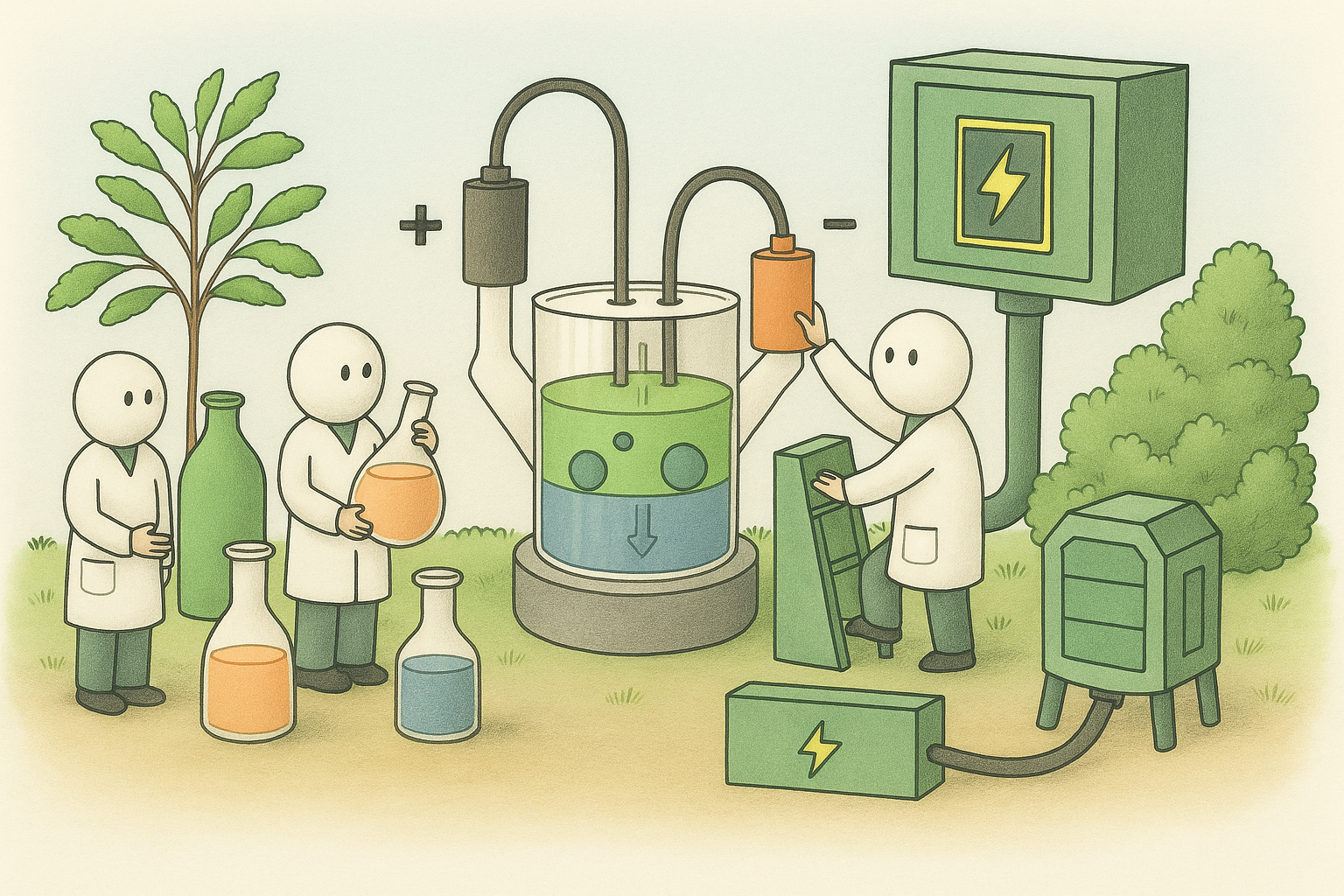
Let’s imagine some bold ideas! New separations technologies are on the horizon, this usually requires novel design of advanced materials (e.g. ligands, green solvents), use of new driving forces (e.g. electric, microwave, light), as well as designing new separation devices. With AI-guided algorithms (such as Bayesian optimisation), we are able to navigate our search in a large design space to identify green solvents, or to find the best experimental conditions to meet multiple objectives in a short time.